
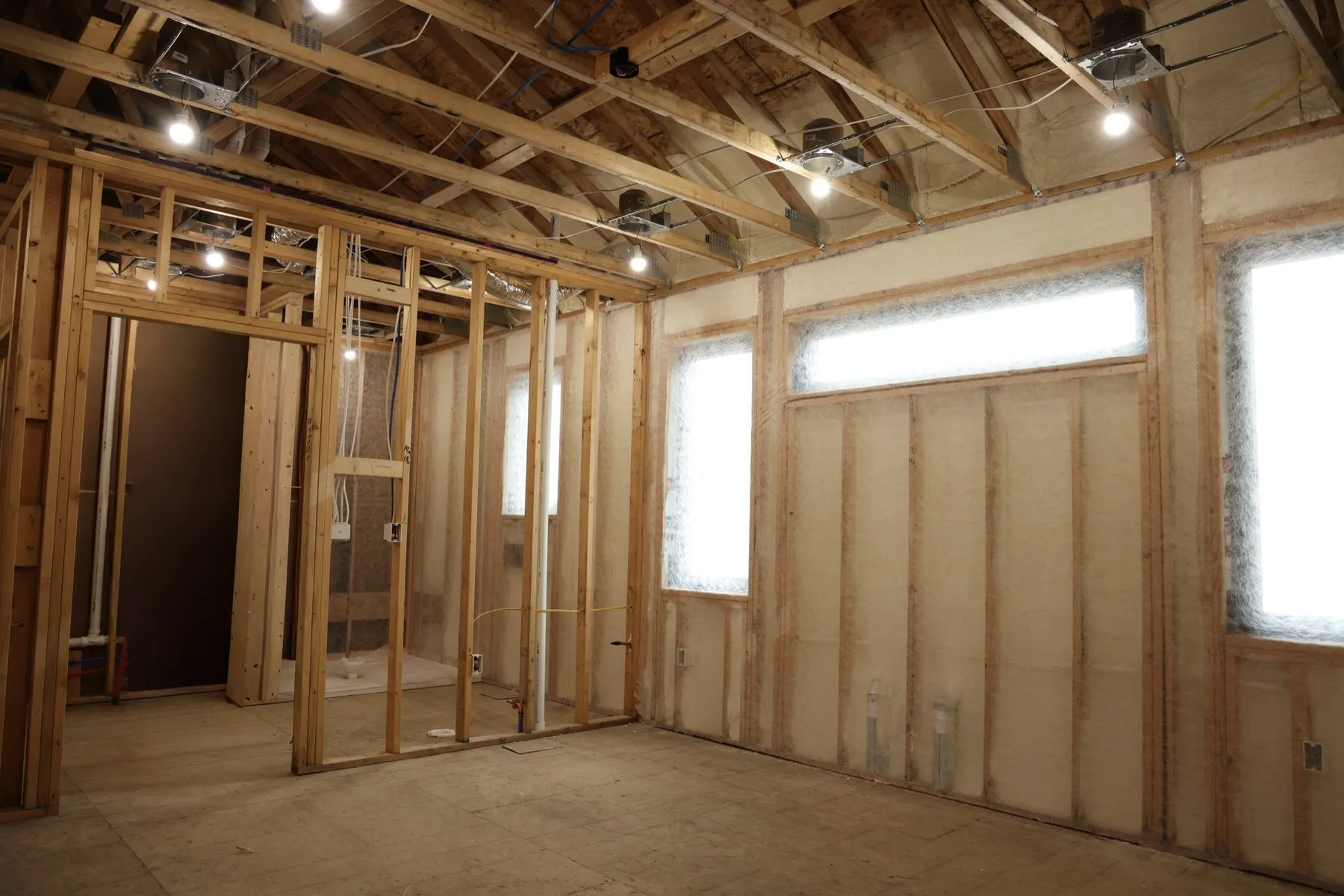
Why Spray Foam Works Here
Phoenix heat does not just warm your building. It presses through the roof, the walls and every gap it can find.
Heat Transfer Is Only Half the Problem
Most people think of insulation as a blanket that slows heat. That part is true. But heat also rides on moving air, and moving air slips through cracks at top plates, around pipes and wires, and along the edges of framed cavities.
A material that only slows heat leaves those paths open. In a desert summer, the paths matter as much as the blanket.
What Foam Does That Batts Cannot
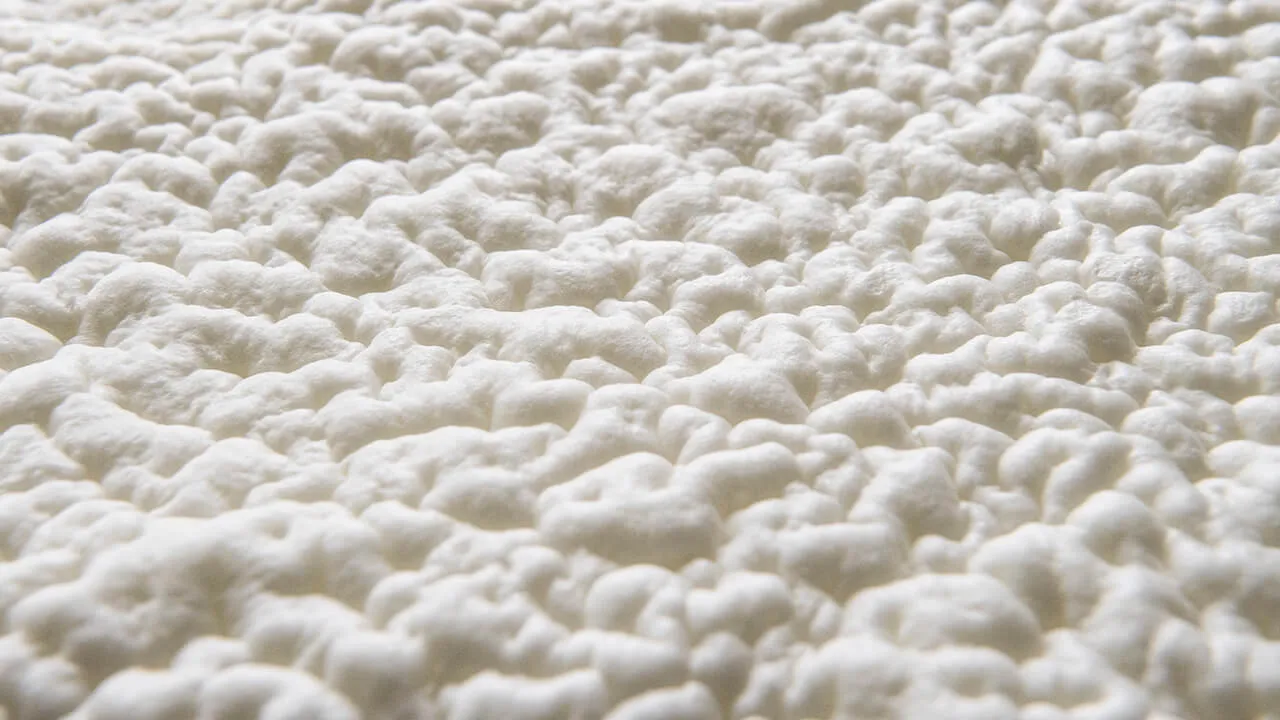
Spray foam goes on wet and expands in place. It fills odd-shaped cavities, bonds to wood, block and steel, and forms an air barrier where it is applied. Insulation and air sealing happen in the same pass.

Foam vs. the Alternatives
Spray Foam
- Insulates and air-seals in one pass
- Bonds to wood, concrete and metal
- Fits irregular and hard-to-reach cavities
- Costs more up front than batts
Fiberglass
- Common and inexpensive
- Slows heat but does not stop air
- Relies on careful fitting to perform
- Often paired with separate air sealing
Cellulose
- Blown into attics and wall cavities
- Good coverage over flat attic floors
- Does not air-seal on its own
- Air control depends on the assembly
None of these is right for every building. The assembly decides.
From Attics to Steel Buildings Across the Metro
In this metro the roof is the battlefield. Houses bake from the attic down. Shops and metal buildings bake through every panel. Foam goes on the roof deck of a ranch house the same way it goes on the steel of a warehouse: directly at the surface where the heat arrives first.
Sometimes Foam Is Not the Answer
Budget, assembly, moisture strategy, ventilation, access and code all factor in. Some projects call for blown insulation or a radiant barrier instead. When that is the case, we say so during the estimate.
The first question is not how much foam a building can hold. It is what the building is trying to do.
Ask Us About Your BuildingStraight Answers Before You Decide
Does spray foam work on metal buildings?
Yes. Closed-cell foam is commonly applied to steel roof decks and wall panels in shops, barns and warehouses. Surface prep and site conditions matter, which is part of what the estimate visit covers.
What is the difference between open-cell and closed-cell foam?
Open-cell is lighter and expands further, which suits many interior cavities. Closed-cell is denser and carries a higher insulating value per inch. Where the foam is going usually decides which one we specify.
Can spray foam be used in new construction?
Yes. New builds are a straightforward fit because the framing is open and the areas to be foamed are easy to reach before drywall.
How thick does the foam need to be?
It depends on the assembly and the goal of the project. Your estimate states the installed thickness in writing, so the number is settled before work starts.
Do we have to leave the building during installation?
Re-entry guidance varies by product and manufacturer. We follow the guidance for the specific product on your project and tell you what it means for your schedule.
Is foam worth it if I already have attic insulation?
Sometimes yes, sometimes no. It depends on the condition of the existing material, the assembly and what you want the building to do. Some projects add to what is there; others start with removal.
Not Sure What Your Building Needs?
Describe the property and we will walk you through the options.